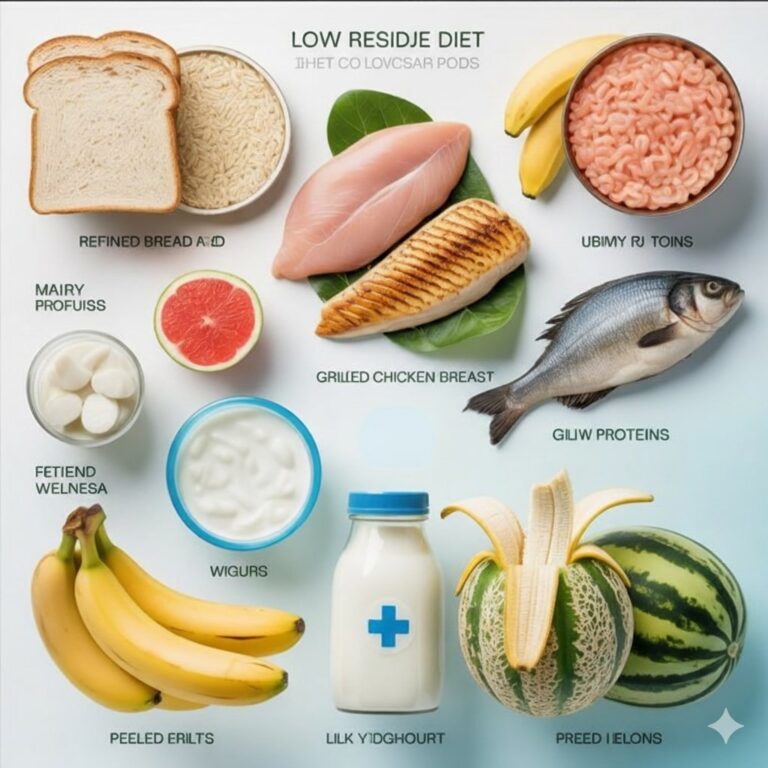
Low Residue Diet Foods List For Easy And Safe Digestion

Introduction
Low residue diet foods are important if you want easy and safe digestion. Many people choose this eating plan to help calm their gut or prepare for medical procedures. This type of diet focuses on low fiber foods that are gentle on the stomach. In this post, you will learn what foods to eat, what foods to avoid, meal ideas, and tips to stay comfortable.
Whether you are asking “what foods are on a low residue diet” or looking for the best foods for gut comfort, this guide makes it simple and clear. The goal is to help you feel better with food that keeps your digestion smooth.
What Is a Low Residue Diet?
A low residue diet means eating foods that are easy to digest. These foods leave little waste in your gut. That means your body does not have to work hard to break them down.
Doctors often recommend this diet for people with digestive problems. It is also used before medical tests like a colonoscopy. In that case, people may follow a low fiber diet before colonoscopy because it helps clear the bowel.
The main idea is to reduce fiber and choose foods that are smooth and soft. This can help reduce gas, bloating, cramps, and diarrhea. You will find many low residue diet foods list ideas here to make daily eating easier.
Why Choose a Low Residue Diet?
People choose a low residue diet for different reasons:
- To Improve Digestion Comfort
If you have belly pain, gas, or diarrhea, eating foods that are gentle on your gut can help. A low residue diet can reduce symptoms and make you feel better.
- Before or After Medical Tests
Doctors may ask you to follow a low fiber diet food list for a few days before a colonoscopy or other tests. This helps clean the bowel and give doctors a clear view.
- To Rest the Digestive Tract
Some digestive diseases like Crohn’s disease or ulcerative colitis can flare up. Eating low residue foods may help calm the gut and reduce irritation.
- For Short‑Term Gut Relief
Sometimes stress, medications, or food choices cause digestion trouble. A low residue diet can provide temporary relief until the gut settles.
Core Principles of a Low Residue Diet
Here are the basic rules:
- Choose low fiber foods. Fiber adds bulk to stool. Reduce it when you want easy digestion.
- Avoid foods that are hard to digest. These include seeds, nuts, raw vegetables, and whole grains.
- Cook foods well. Steaming, boiling, and baking make foods easier on your gut.
- Drink fluids. Water keeps your digestion moving and prevents discomfort.
- Eat simple meals. Complex meals can be harder for your gut to break down.
Low Residue Diet Foods (Easy List)
Below is a clear list of foods you can eat on a low residue plan.
- Grains & Bread
These are good choices because they are low in fiber:
- White bread
- Plain bagels
- White rice
- White pasta
- Refined cereals like corn flakes
These are all part of the low residue diet foods list because they have low fiber and are easy to digest.
- Protein Foods
Choose proteins that are gentle on the gut:
- Tender cooked chicken
- Turkey
- Lean fish (like cod or tilapia)
- Eggs
- Tofu
Avoid fried meats or tough cuts of beef because they can irritate digestion.
- Dairy (if tolerated)
Some people can eat dairy, while others may not. Try small amounts first.
- Milk
- Yogurt (plain)
- Cheese
If dairy bothers you, choose lactose‑free options.
- Cooked Vegetables
Raw vegetables can be hard to break down. Cooked veggies are gentle:
- Carrots (cooked)
- Green beans (well cooked)
- Potatoes with skins removed
- Zucchini (cooked)
These are all low fiber foods that support easier digestion.
- Fruits
Choose fruits without seeds or skins:
- Bananas
- Applesauce
- Canned peaches or pears
- Melons
Avoid berries and fruits with seeds, because they are higher in fiber.
- Smooth Snacks
These are easy on the gut:
- Plain crackers
- Gelatin
- Custard
- Applesauce
Snacks with seeds, nuts, or whole grains are not on this list.
Example Low Residue Diet Food List Meals
Here are some meal ideas that fit this diet and are simple to prepare:
Breakfast
- Scrambled eggs with white toast
- Plain oatmeal (made with water)
- Yogurt with a banana
Lunch
- Chicken breast with white rice
- Turkey sandwich on white bread
- Cream of potato soup
Dinner
- Grilled fish with mashed potatoes
- Tender turkey and pasta
- Cooked carrots and soft white roll
Snacks
- Applesauce
- Crackers
- Plain pudding
- Gelatin dessert
These meals use ingredients from the low residue foods list and help keep digestion calm and safe.
What Foods to Avoid
Here are foods that are not part of a low residue diet because they are high in fiber or hard to digest:
High Fiber Foods
- Whole grain breads
- Brown rice
- Bran cereals
- Popcorn
- Seeds and nuts
Raw Vegetables
- Broccoli
- Lettuce
- Cauliflower
- Bell peppers
Fruits with Skins and Seeds
- Berries
- Grapes
- Apples with skin
- Oranges
These foods are healthy for most people, but not when you are following a low residue plan. They add bulk to stool and may cause more gas or bloating.
Are Mushrooms Low Fiber?
Many people ask: Are mushrooms low fiber?
Mushrooms contain fiber and may be harder to digest than smooth foods. For some people, small cooked amounts may be okay. But most nutrition guides list mushrooms as higher in fiber, so they are usually not included in a strict low residue diet.
If you want to try them, start with a very small amount and see how your body reacts.
Tips for Success on a Low Residue Diet
Here are practical tips to follow this diet well:
- Cook Foods Softly
Boil, steam, or bake foods until they are soft and easy to chew.
- Chew Slowly
Take your time chewing — this helps your gut break food down better.
- Drink Plenty of Fluids
Water helps your digestion and keeps you comfortable.
- Avoid Tough Foods
Stay away from seeds, nuts, and raw vegetables when following this plan.
- Track Your Symptoms
Keep a simple journal of what you eat and how you feel. This helps you see what works best.
How Long Should You Follow It?
A low residue diet is usually short term. Many people use it for:
- A few days before a medical procedure
- A short period during a flare of digestive symptoms
- A few days when your gut feels irritated
After symptoms improve, you can slowly add more fiber back into your meals. Always talk to your doctor before changing your diet, especially if you have a health condition.
Conclusion
A low residue diet foods list makes it easier to care for your digestion. This eating plan focuses on low fiber foods that are gentle, easy to digest, and safe for your gut. By choosing the right foods and preparing them simply, you can reduce discomfort and support your digestive health.
Remember:
- Choose soft and simple foods
- Avoid high fiber and hard‑to‑digest foods
- Drink plenty of water
- Listen to your body
- Frequently Asked Questions (FAQ)
- Q1: What is a low residue diet?
A low residue diet includes foods that are easy to digest and low in fiber, leaving minimal waste in the intestines. - Q2: Can I eat fruits on a low residue diet?
Yes, peeled and cooked fruits like bananas, applesauce, canned pears, and melons are safe. Avoid berries or fruits with seeds. - Q3: Are mushrooms low fiber?
No, mushrooms contain fiber and may irritate the gut. Small cooked amounts may be tolerated but are generally avoided. - Q4: Can I eat dairy on a low residue diet?
Yes, milk, plain yogurt, and cheese are fine if tolerated. Lactose-free options can help if dairy causes discomfort. - Q5: Is this diet safe for everyone?
It is generally safe short-term, especially for digestive issues or medical prep. Always consult your doctor for long-term use. - Q6: How long should I follow a low residue diet?
Usually short-term: a few days before a procedure, during digestive flare-ups, or when gut discomfort is high. Slowly add fiber back after recovery. - Q7: Can I drink coffee or tea?
Yes, in moderation. Avoid caffeinated drinks if they irritate your stomach. - Q8: What foods are best for meal planning?
Soft proteins, white rice, tender vegetables, peeled fruits, and smooth snacks like applesauce or custard.