How to Eat 150 Grams of Protein a Day: Easy Meal Guide

Eating 150 grams of protein a day may sound challenging, but with the right approach, it can fit easily into a healthy routine. Protein plays a vital role in muscle repair, fat loss, and overall strength, especially for active adults.
A smart high protein diet plan focuses on real foods rather than extreme restrictions or supplements. Understanding how much is 150 grams of protein in daily meals helps remove confusion and makes planning simple.
When structured correctly, a 150g protein meal plan supports energy levels, workout recovery, and long-term wellness. Learning how to eat 150 grams of protein a day allows you to build a sustainable eating pattern that delivers results without feeling overwhelmed or deprived.
Table of Contents
- Introduction
- What Does 150 Grams of Protein a Day Mean?
- Why Eating 150 Grams of Protein Matters?
- How Much Is 150 Grams of Protein in Real Food?
- How to Eat 150 Grams of Protein a Day (Step-by-Step)?
- 150g Protein Meal Plan (Real Food Example).
- Best High-Protein Foods to Reach 150g.
- Protein Timing: How to Spread 150g Across the Day.
- Do You Need Supplements to Hit 150g of Protein?
- Common Mistakes on a High Protein Diet.
- FAQs
- Conclusion
What Does 150 Grams of Protein a Day Mean?
Protein is one of the three essential macronutrients, and it’s responsible for building muscle, repairing tissue, supporting hormones, and maintaining overall health.
For most adults, eating 150 grams of protein per day typically means:
- You are following a balanced high protein diet.
- You are likely active, strength training, or aiming for body recomposition.
- You want better satiety, muscle retention, and metabolic support
In practical terms, 150g of protein is not eaten in one meal. It’s spread across the day-usually over 3 main meals and 1-2 snacks.
This intake level commonly fits into a high protein meal plan designed for adults who want performance, not restriction.
Why Eating 150 Grams of Protein Matters?
1. Supports Muscle Growth and Strength.
Protein provides amino acids needed for muscle repair and growth. For people lifting weights or staying physically active, protein for muscle building is non-negotiable.
2. Helps With Fat Loss.
High-protein diets increase satiety and preserve lean muscle during calorie deficits. This is why protein intake is often higher during weight loss phases.
3. Improves Daily Energy and Recovery
Adequate protein supports stable blood sugar, reduces cravings, and improves recovery between workouts.
4. Supports Healthy Aging
For adults, especially over 30-40, higher protein intake helps prevent muscle loss and supports long-term mobility.
In short, a high protein diet meal plan built around 150g of protein is about strength, longevity, and sustainable results.
How Much Is 150 Grams of Protein in Real Food?
This is one of the most searched questions-and for good reason.
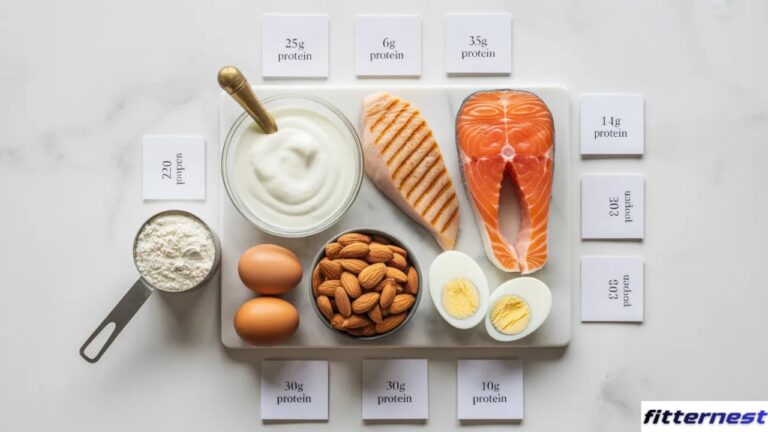
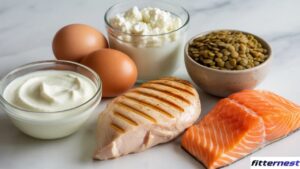
Here’s what 150 grams of protein roughly looks like across a full day:
- 3 large eggs → 18g.
- Greek yogurt (1 cup) → 20g.
- Chicken breast (6 oz cooked) → 42g.
- Salmon (6 oz) → 34g.
- Lentils (1 cup cooked) → 18g.
- Cottage cheese (1 cup) → 24g.
You don’t need all of these in one day-but this shows how real foods add up quickly when chosen wisely.
How to Eat 150 Grams of Protein a Day (Step-by-Step).
Step 1: Set a Protein Target Per Meal
Instead of thinking “150 grams,” think:
- 35-40g per main meal.
- 20-30g from snacks.
This approach makes the goal manageable.
Step 2: Build Meals Around Protein.
Start each meal by choosing your protein source first. Then add carbs, fats, and vegetables around it.
Step 3: Choose High-Quality Protein Sources.
Focus on real food protein sources like:
- Eggs.
- Poultry.
- Fish.
- Lean beef.
- Dairy.
- Legumes.
- Tofu and tempeh.
Step 4: Be Consistent, Not Perfect.
You don’t need to hit 150g exactly every day. Consistency over time matters more than daily precision.
150g Protein Meal Plan (Real Food Example).
Here’s a simple, realistic 150g protein meal plan example:
Breakfast (35g protein)
- 3 eggs scrambled (18g).
- Greek yogurt, plain (1 cup) (20g).
Lunch (40g protein)
- Grilled chicken breast (6 oz) (42g).
- Mixed vegetables.
- Brown rice or quinoa.
Snack (25g protein)
- Cottage cheese (1 cup) (24g).
- Handful of berries.
Dinner (45g protein)
- Salmon fillet (7 oz) (40g).
- Roasted vegetables.
- Olive oil drizzle.
Total: 150-155 grams of protein.
This fits perfectly into a high protein diet plan without supplements.
Best High-Protein Foods to Reach 150g
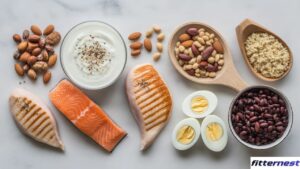
Some foods make hitting your target much easier:
Animal-Based Options
- Chicken breast.
- Turkey.
- Lean beef.
- Fish and seafood.
- Eggs.
- Greek yogurt.
- Cottage cheese.
Plant-Based Options
- Lentils.
- Chickpeas.
- Black beans.
- Tofu.
- Tempeh.
- Edamame.
Combining animal and plant sources helps maintain variety and micronutrient balance.
Protein Timing: How to Spread 150g Across the Day.
Spreading protein evenly improves absorption and muscle protein synthesis.
A smart distribution looks like:
- Breakfast: 30-40g.
- Lunch: 35-45g.
- Snack: 20-30g.
- Dinner: 35-45g.
Avoid eating most of your protein in one meal. Balanced intake supports better results.
Do You Need Supplements to Hit 150g of Protein?
Short answer: No.
You can reach 150g easily using whole foods. Supplements like protein powder are optional-not required.
Use protein powder only if:
- You struggle with appetite.
- You need convenience.
- You travel often.
A protein without supplements approach is fully achievable with planning.
Common Mistakes on a High Protein Diet
- Skipping protein at breakfast.
- Relying only on supplements.
- Not tracking portions initially.
- Ignoring fiber and vegetables.
- Eating too much protein in one meal.
Avoid these, and your balanced high protein diet becomes sustainable.
FAQs
How do I get 150 grams of protein a day?
Plan protein-focused meals, aim for 30-40g per meal, add one high-protein snack, and prioritize real foods like meat, eggs, dairy, and legumes.
Is 150g of protein too much for weight loss?
No. For most active adults, 150g supports fat loss by preserving muscle and increasing fullness, as long as calories are controlled.
What do 140 grams of protein look like in a day?
Very similar to 150g-slightly smaller portions of meat or one less high-protein snack across the day.
How much protein is in 2 eggs a day?
Two large eggs provide about 12 grams of protein, so they’re best combined with other protein sources.
What food is the highest in protein?
Lean meats, poultry, fish, and certain dairy products provide the highest protein per serving.
Conclusion
Eating 150 grams of protein a day is not about extremes-it’s about structure, smart food choices, and consistency.
When built into a high protein diet meal plan, this intake supports muscle growth, fat loss, energy, and long-term health.
Focus on real foods, spread protein across your meals, and keep your approach flexible. With the right system, hitting 150g becomes second nature-and your results will show it.

I am a dedicated wellness and fitness writer promoting a healthy, balanced lifestyle. I provide easy fitness guidance, smart nutrition tips, and mindful living ideas to help readers develop lasting habits and reach their wellness goals.
View All Articles